The History Of Film
Eadweard Muybridge
Born 9th April 1830
Died 8th May 1904
Muybridge was important because of his his pioneering work in the studies of motion.
In 1878 Muybridge in an attempt to win a bet set up a series of cameras to capture a horse running and to see if all its legs were off the ground, His 'The Horse In Motion' this is considered the first film ever. His role in the film industry is massive being considered the Godfather of Film.
On the 15th of June 1878 Muybridge wanted to study the horse galloping to he planned to take a series of photographs of it, he placed numerous large plate glass in a line along the track, he copied the images in the form of silhouettes onto a disc that were to be viewed on a machine he invented called 'zoopraxiscope'

Here are some examples of his works: American bison cantering – set to motion in 2006 using photos by Eadweard Muybridge


Lumiere Brothers
Auguste and Louis Lumiere
Born October 19 1862 (A)
October 5 1864 (L)
Died April 10 1954 (A)
June 6 1948 (L)
Were two french filmmakers credited to be the first film makers in history They They patented the cinematograph, which contrary to Edison's "peepshow" kinetoscope, the former allowed viewing by multiple parties at once, Their very first film, Sortie de l'usine Lumiere is widely considered as the first real motion picture in history.
They also created the worlds first film poster for the 1895 film Larousse arrosé which was a film that is known as the first instance of film comedy aswelll as the first to show a fictional story
Shot in Lyon in the spring of 1895, the film portrays a simple practical joke in which a gardener is tormented by a boy who preforms numerous pranks on him the film only lasts 49 seconds and was the first film ever to use slapstick


Iwan Serrier
Born 21 September 1878
Died 1953
Is a dutch born Electrical engineer notable for inventing the Moviola.
The Moviola: is a device that would allow a film to be edited it was invented in 1924. The company Moviola is still in existence to this day, its located in Hollywood. when it was invented many studios adopted the Moviola including Universal Studios, Warner Brothers, Charles Chaplin Studios, Buster Keaton Productions, Mary Pickford, Mack Sennett.
The Moviola allowed editors to edit individual shots , the vertically orientated Movilas were the standard for film editing untill the 1970's when the horizontal flatbed editor became more common
Here is a picture of one of the first Moviola's ever to be made.
Although a few high profile filmmakers continued to prefer the Moviola for example Steven spielberg. Michael Kahn recieved an award nominatio for best film editing for his work on Munich which he had edited using a Moviola.


A trailer for the film 'Munich' that was edited uising a Moviola By Michael Kahn.
Steenbeck

Steenbeck is a brand name that has become synonymous with a type of flatbed film editing the company was founded by Wilhelm steenbck in Hamburg Germany in 1931 since ints inception it has become a widely known in the film editing scene and more than 25,000 machines are in operation around the world , despite the move away from physical film stock much of the editing is now based on digital media. The Steenbeck's lower light levels and controllable speed make it a preferred piece of equipment for film archives and restoration facilities as prints can be quickly and easily inspected with less risk of damage compared to a movie projector.


Soviet Montage Theory
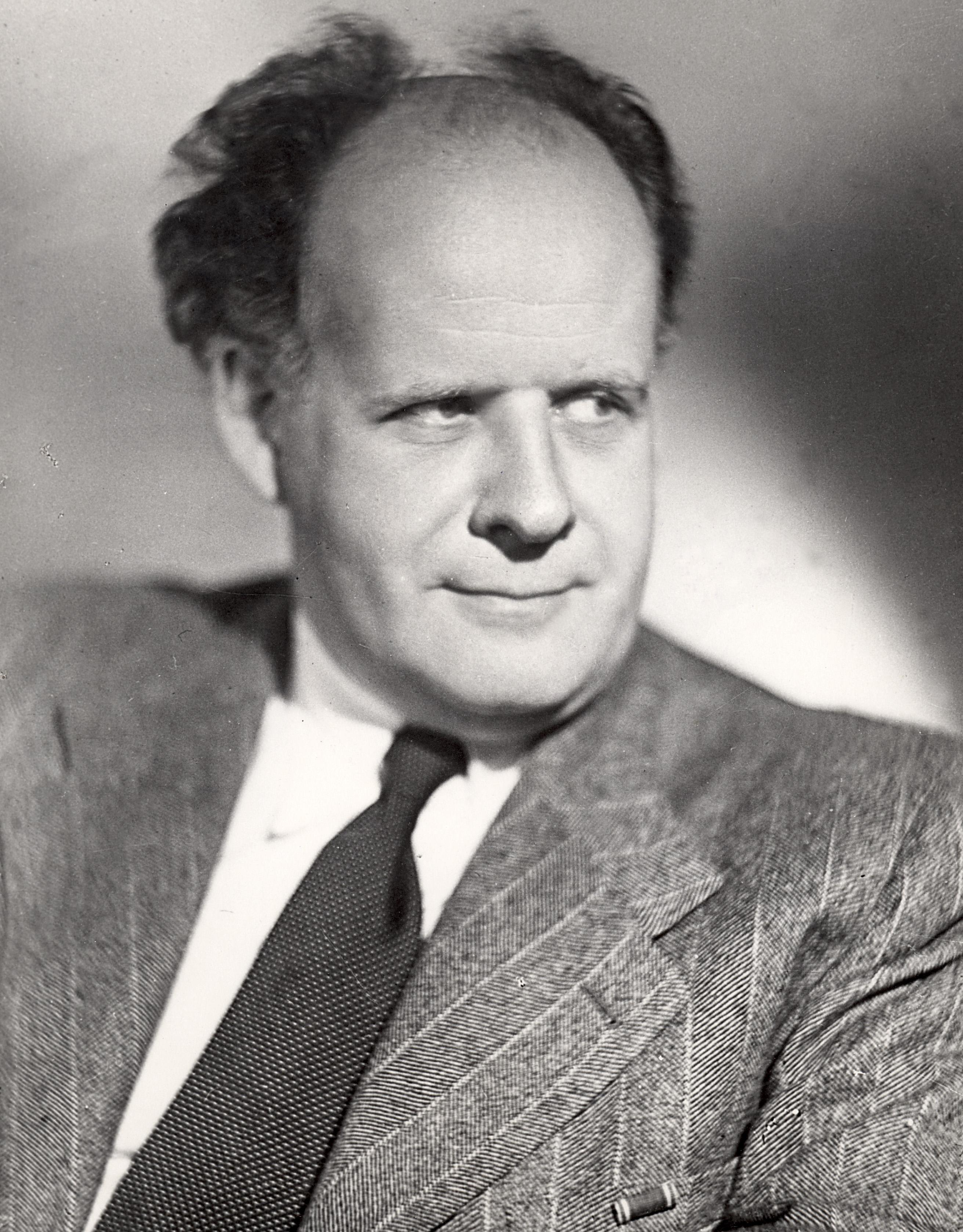
Pioneered by Sergei Eisenstein (famous for his film Battleship Potemkin) is a specific way of editing that allows you to blend to different images together to create an idea for example a man running down a street and a clock ticking, this creates the scenario that he is late for a deadline a famous example of this would be in the comedy film Team America World Police in it not only do they include a montage of the character training to take on Kim Jong ill but they involve what many western montages do: music except this music was a song that actually made fun and explained what a montage is and how is used. (sometimes to develop plot and as use for a passage of time)
There are many different types of Montage used through out the film making industry here is three examples;
Metric – where the editing follows a specific number of frame cutting to the next shot no matter what is happening within the image. This montage is used to show the most basal and emotional of reactions in the audience.
Rhythmic- this includes things like cutting a film based on continuity
 Tonal – a tonal montage uses the emotional meaning of the shots—not just manipulating the temporal length of the cuts or its rhythmical characteristics—to elicit a reaction from the audience even more complex than from the metric or rhythmic montage a great example of this would be Eisenstein's film Battleship Potemkin.
D.W Griffith
Born January 22 1875
Died July 23 1948
He began making short films in 1908 and only making his film debut in 1913 with his film Judith of Bethulia but it was his pioneering film Birth of A Nation made in 1913 that is still remembered today for its use of advanced camera and narrative techniques and its popularity as it glorified the KKK in a time when racism was the norm Down in the southern states and even creeping up north. He himself is glorified as a major pioneer in the montage use of editing and for creating one of the most expensive films of that time called Intolerance which he spent 400,000 dollars on. The film bombed and he spent the rest of his life paying of that debt.
Continuity editing
Continuity editing is the predominant style of film editing and video editing in the post-production process of film making of narrative films and television programs. The purpose of continuity editing is to smooth over the inherent discontinuity of the editing process and to establish a logical coherence between shots.
In most films, logical coherence is achieved by cutting to continuity, which emphasizes smooth transition of time and space. However, some films incorporate cutting to continuity into a more complex classical cutting technique, one which also tries to show psychological continuity of shots. The montage technique relies on symbolic association of ideas between shots rather than association of simple physical action for its continuity.
Here are some common techniques of continuity editing An ellipsis is an apparent break in natural time continuity as it is implied in the film's story. The simplest way to maintain temporal continuity is to shoot and use all action involved in the story's supposed duration whether it be pertinent or not. It would also be necessary to shoot the whole film in one take in order to keep from having to edit together different shots, causing the viewer's temporal disorientation. However in a story which is to occupy many hours, days, or years, a viewer would have to spend too long watching the film. So although in many cases the ellipsis would prove necessary, elimination of it altogether would best preserve any film's temporal continuity.
Diegetic sound is that which is to have actually occurred within the story during the action being viewed. It is sound that comes from within the narrative world of a film (including off-screen sound). Continuous diegetic sound helps to smooth temporally questionable cuts by overlapping the shots. Here the logic is that if a sonic occurrence within the action of the scene has no breaks in time, then it would be impossible for the scene and its corresponding visuals to be anything but temporally continuous.
The establishing shot is one that provides a view of all the space in which the action is occurring. Its theory is that it is difficult for a viewer to become disoriented when all the story space is presented before him. The establishing shot can be used at any time as a reestablishing shot. This might be necessary when a complex sequence of cuts may have served to disorient the viewer.

Thomas Edison
Born February 11 1847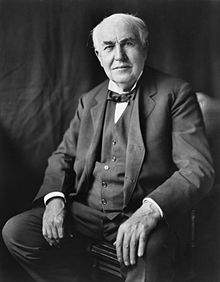
Thomas Edison
Died October 18 1931
Was an american Inventor and Business, his work has greatly effected lives around the world as he created the motion picture camera and along with the Lumiere brothers is considered a pioneer in the film making industry as he helped make the motion camera a reality by the 1890's
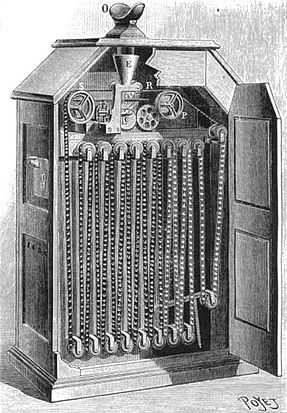
In 1891, Thomas Edison built a Kinetoscope, or peep-hole viewer. This device was installed in penny arcades, where people could watch short, simple films. The kinetograph and kinetoscope were both first publicly exhibited May 20, 1891.
Edison's film studio made close to 1,200 films. The majority of the productions were short films showing everything from acrobats to parades to fire calls including titles such as Fred Ott's Sneeze (1894), The Kiss (1896), The Great Train Robbery (1903), Alice's Adventures in Wonderland (1910), and the first Frankenstein film in 1910.
Edison stated that his favorite film was Birth Of A Nation by D W Griffith although he thought that the "Talkies" had spoiled everything for him and "There isn't enough acting on the screen"